
The Three Imagined Lives as Practice
The Glass Bead GameThis flow treats Knecht’s Lives as experimental biographies through which he tests changing forms of vocation and the limits of self-knowledge.
increasing Bearing strength in each event
 decreasing
Bearing strength in each eventdecreasingThe Assigned Form

Biography as Exercise
A Castalian Custom
Students write fictional Lives set in historical periods, entering unfamiliar settings through style and imagination. The exercise offers a permitted channel for creative energy.
Self-Exploration
A chosen life can reveal the writer’s hopes and conflicts. Knecht’s three surviving examples become indirect records of his inner development.
The Prehistoric Life

Tradition and Sacrifice
A World of Senses
The Rainmaker story imagines knowledge rooted in nature, ritual, and inherited practice. Knecht’s protagonist learns to read the world through attention rather than texts.
A Costly Vocation
The Rainmaker ultimately offers himself to protect communal order. The story explores service as an embodied, dangerous calling.
The Christian Life

Listening and Despair
A Quiet Ministry
Josephus Famulus serves through patient listening and careful silence. His task seems humble but gradually exhausts him.
Renewal through Relationship
His flight leads to Dion Pugil, who reveals his own despair. Mutual dependence transforms confession from a solitary performance into shared service.
The Indian Life
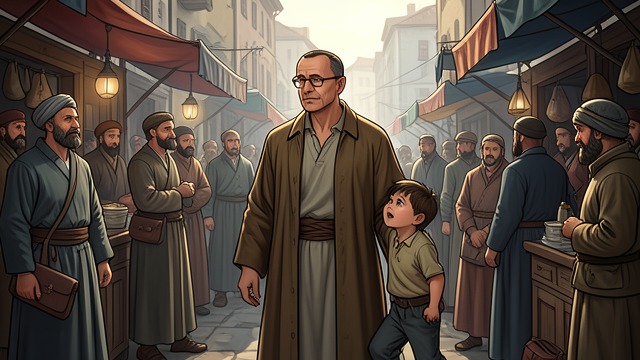
The Appearance of Maya
A Life of Attachments
Dasa’s path moves through love, violence, kingship, and loss. Ordinary experience appears complete until it is abruptly revealed as an ordeal produced by the yogi.
Discipleship
Dasa rejects the desire to escape by self-destruction and resumes service. His awakening is not an arrival at certainty but a beginning under discipline.
The Lives and Knecht’s Future
Art before Scholarship
A Deliberate Limit
The authorities ask Knecht to make later Lives more historically detailed. He begins research for another but finds that accumulated facts obstruct imaginative creation.
Unfinished Reflection
The Lives remain poetic experiments rather than proven biographies. Their repeated movements between dependence and awakening foreshadow Knecht’s own transitions.
During Knecht’s Years of Freedom
Early in Knecht’s free-study years
After the Rainmaker story, during the same study period
After Knecht’s first two Lives
After the third Life is submitted
